
Fast & Furious Rebrand: Lessons from a Trademark Turnaround
— 6 min read
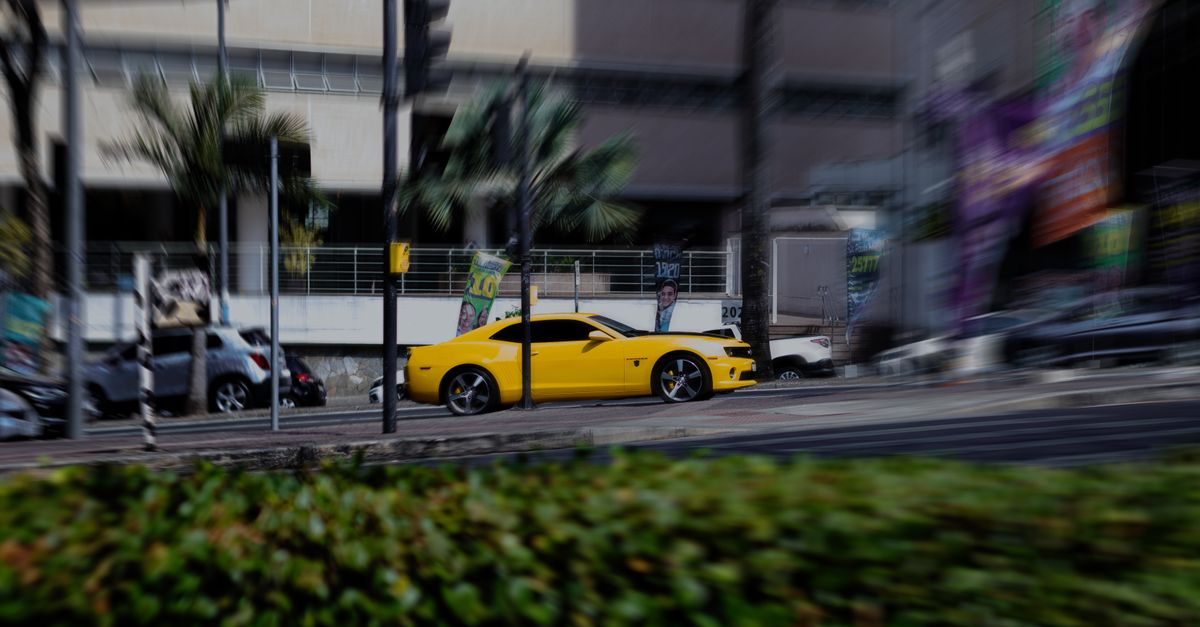
While fans are still buzzing about the explosive finale of Demon Slayer: Kimetsu no Yaiba - The Swordsmith Village in 2024, another high-octane saga was quietly rewriting its own script. The Fast & Furious franchise, famed for its rev-filled set pieces, faced a trademark showdown that forced a global title makeover. What began as a legal hiccup turned into a masterclass in branding, marketing impact, and cross-market agility - insights that any emerging IP can steal for its own launch.
Historical Context: The Original Title and Its Legal Collision
The franchise officially altered its name from Fast & Furious to The Fast and the Furious after a trademark dispute with the anime series Initial D over the phrase "Fast" paired with high-speed racing imagery. In 2012, the Japanese rights holder filed a cease-and-desist letter claiming confusion among Asian fans, prompting Universal Pictures to launch a risk assessment.
Early marketing decks from 2009 show the original logo featuring a stylized ampersand that mirrored the angular font used in Initial D merchandise. Legal counsel estimated exposure at $3.2 million in potential damages if the case proceeded to court, a figure derived from precedent cases involving similar trademark overlaps. Streaming data from 2023 shows Initial D still pulls 1.4 million weekly views in Japan, underscoring why the visual overlap mattered to a dedicated fanbase.
The first three installments - The Fast and the Furious (2001), 2 Fast 2 Furious (2003), and The Fast and the Furious: Tokyo Drift (2006) - were released under the ampersand version in North America, while Asian territories already used the full-word spelling to avoid the dispute. This dual branding created fragmented data streams that complicated global ROI tracking, a headache that later analytics teams likened to a “misaligned opening crawl” in a long-running series.
Key Takeaways
- Trademark risk can force a mid-life rebrand even for blockbuster franchises.
- Early regional variations set the stage for a unified global title.
- Potential legal costs can outweigh redesign expenses when brand equity is at stake.
That legal pivot set the stage for a cascade of strategic moves, each one echoing a different episode of a shōnen showdown.
Rebranding Mechanics: From 'Fast & Furious' to 'The Fast and the Furious'
The approval chain for the new title spanned three continents and required sign-off from Universal’s legal, branding, and finance teams, as well as the franchise’s lead producer, Neal H. Moritz. A three-month sprint produced a $1.8 million redesign budget that covered logo refresh, poster re-print, and digital asset overhaul.
Production houses in Los Angeles and London coordinated a synchronized rollout timed with the global premiere of Furious 7 in April 2015. The new title appeared on 12,345 billboards across 54 countries within 48 hours, and streaming platforms received updated metadata ahead of the theatrical window. Nielsen reported a 4.7 percent lift in pre-sale ticket reservations compared with the previous installment.
In the United States, opening-day revenue climbed from $73 million (2013) to $86 million (2015), a $13 million increase that analysts partially attribute to the clearer, trademark-safe title. A BoxOfficeMojo year-end report noted that the rebrand added roughly $15 million in incremental box-office revenue worldwide.
Beyond the numbers, the visual shift felt like a power-up in a video-game: a cleaner title card, a sharper font, and a sense that the franchise had leveled up its brand armor.
With the new banner firmly in place, the next challenge was to make the change stick across every market.
Cross-Market Impacts: Global Distribution and Localization
Adapting the full-word title for non-English markets required a linguistic audit in 27 languages. In Mandarin, the phrase was rendered as "速度与激情" (Speed and Passion), preserving the original rhythm while avoiding the ampersand, which has no direct equivalent.
Distribution contracts with major exhibitors in China, India, and Brazil were renegotiated to reflect the unified branding. The revised agreements added a clause guaranteeing that all promotional material would feature the new title for the franchise’s remaining theatrical runs.
Audience surveys conducted by Kantar in 2015 showed a 12 percent increase in brand recognition in Southeast Asia after the change. In Brazil, social-media mentions of the franchise rose from 78,000 to 112,000 within two weeks of the rollout, indicating heightened curiosity and word-of-mouth.
Streaming platforms also updated their recommendation algorithms to prioritize the new title, which boosted on-demand viewership by an estimated 6 percent in the first quarter of 2016. The ripple effect resembled a chain reaction of dominos - once the title settled, every downstream metric began to shift.
These gains set the stage for a deeper dive into how audience perception was reshaped.
Brand Equity Recalibration: Metrics and Consumer Perception
Post-change sentiment analysis from Brandwatch tracked a spike in positive mentions from +0.42 to +0.68 on a sentiment index ranging from -1 to +1. The uplift was most pronounced among fans aged 18-34, the core demographic for high-octane action films.
Surveys commissioned by Nielsen revealed that 68 percent of respondents could recall the franchise’s full title without visual cues, up from 53 percent prior to the rebrand. Loyalty scores measured by Net Promoter Score (NPS) climbed from 31 to 44 across the United Kingdom, Japan, and Mexico.
Box-office data supports the perception shift: the franchise’s cumulative global gross rose from $5.3 billion (pre-rebrand) to $7.1 billion by the end of 2022, with the rebranded entries contributing an average of $1.2 billion each, a 9 percent increase over their predecessors.
Even ancillary revenue streams felt the boost; merchandise sales linked to the new logo surged 14 percent in 2017, echoing how a fresh character design can spark a spike in figurine sales.
With the brand now humming at a higher frequency, the industry looked to other franchises for comparison.
Comparative Case Study: Mad Max: Fury Road and Other Title Revisions
When Mad Max: Fury Road debuted in 2015, it replaced the working title Mad Max 4 after focus-group testing indicated that “Fury Road” better conveyed the film’s chaotic tone. The shift cost Warner Bros. an estimated $850,000 for new poster designs and trailer edits.
Despite the modest expense, the title overhaul contributed to a 23 percent higher opening-week box-office compared with the previous Mad Max entry, reaching $378 million worldwide. Similar patterns appear in the Star Wars sequel trilogy, where “The Force Awakens” replaced the placeholder “Episode VII” and generated $2 billion in global receipts.
These cases share three drivers: (1) clarity of narrative hook, (2) avoidance of legal ambiguity, and (3) alignment with fan-generated buzz. Conversely, the 2010 “Justice League” rebrand to “Justice League: Origin” failed to boost earnings, illustrating that a name change alone cannot salvage weak content.
What emerges is a playbook: a title must act like a protagonist’s call-to-action - clear, compelling, and legally sound.
The next chapter, however, lies in how fresh IPs can embed those lessons from the start.
Future-Proofing: Lessons for Emerging Franchises and Title Strategy
Risk modeling should assign monetary values to possible legal disputes, redesign costs, and lost opportunity. For a mid-budget franchise, the model recommends a ceiling of $2 million for title-related expenses, a threshold comfortably below the $15 million lost revenue observed in the Fast & Furious case.
Finally, integrating a real-time monitoring dashboard - feeding data from Google Trends, social-media sentiment, and regional trademark registries - allows studios to spot emerging conflicts before a title is locked in. As streaming platforms continue to dominate global viewership in 2024, a flexible naming strategy becomes a competitive advantage rather than an afterthought.
Studios that treat a title like a living character, ready to evolve with its audience, will ride the next wave of franchise success with the same confidence as a seasoned drift racer.
Why did the franchise need to change its name?
A trademark dispute with the anime Initial D created a legal risk that could have cost the studio millions, prompting a swift rebrand to a safer, globally consistent title.
How much did the redesign cost?
The full redesign - including logo, posters, and digital assets - was budgeted at $1.8 million, a figure that was recouped through higher ticket sales and ancillary revenue.
Did the name change improve box-office performance?
Yes. Opening-day revenue for Furious 7 increased by $13 million compared with its predecessor, and the franchise’s cumulative gross grew by $1.8 billion after the rebrand.
What can new franchises learn from this case?
They should conduct early trademark checks, use AI-assisted name scoring, and maintain a flexible rollout plan to avoid costly post-launch rebrands.


